ACNH Museum Ideas: Build a Museum District That Works
The best ACNH museum ideas treat the museum as a small campus instead of a building dropped beside a path. Plan the entrance, walking loop, exhibit zones, and everyday access together so your museum looks finished and remains easy to use.
Quick Answer: What Makes Good ACNH Museum Ideas?
These ACNH museum ideas start with a readable entrance, one comfortable loop, a little open space around the building, and themed outdoor areas that support the museum without pretending to be extra in-game exhibits. Fossil displays, art easels, fish ponds, bug gardens, café corners, and donation drop-off scenes work well because they give the campus a purpose.
Start with the museum door and the fixed features on your map. Keep the main route wide enough for visitors and daily errands, then place the most detailed scenes on side paths. The free ACNH Island Planner is useful for testing bridges, cliffs, and water before you move a building.
- Choose whether the museum is a town landmark, a quiet nature campus, or a formal gallery district.
- Draw the entrance-to-door route before placing decorative objects.
- Reserve side zones for fossils, art, fish, bugs, or a museum café.
- Leave clear access to the beach, river, shops, and Resident Services.
- Test the route with a simple version before adding small details.
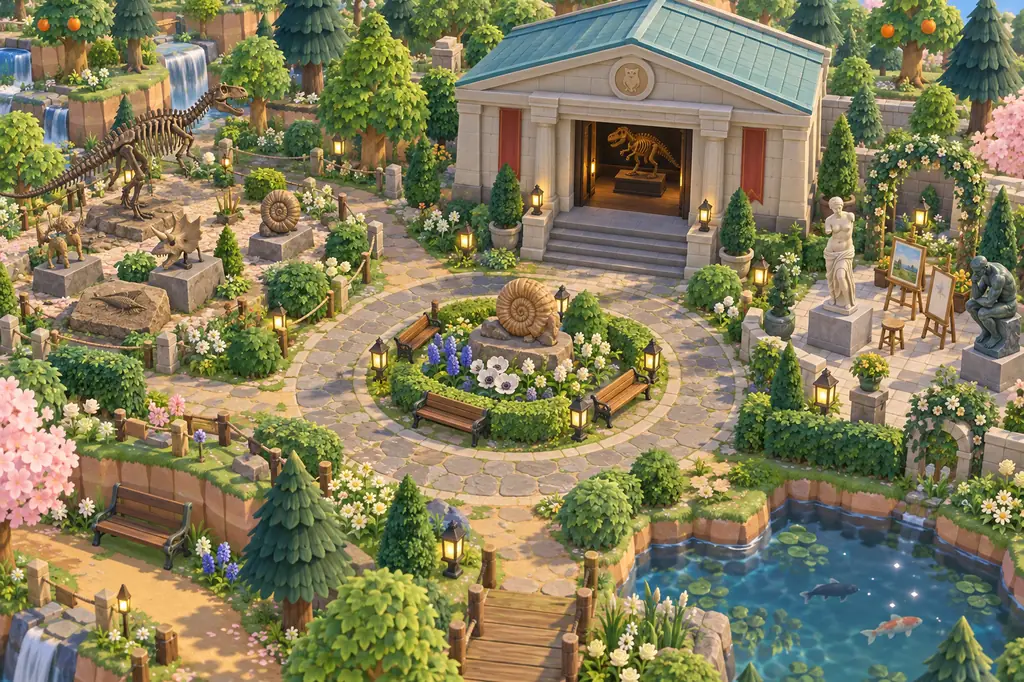
Choose the Museum's Job Before You Choose Its Style
Many Animal Crossing museum ideas look beautiful in a screenshot but become awkward when the museum is placed in a narrow corner. Decide what you want the district to do first. A daily-play campus should shorten errands. A formal gallery can create a dramatic arrival. A nature museum can blend into cliffs, waterfalls, and flower beds. The same building can support all three, but the route and amount of decoration will change.
Trace the airport, Resident Services, river mouths, pier, secret beach, and nearby cliffs before you commit to a museum location. The ACNH map layouts guide helps with fixed features, while the island planner template lets you save a practical version before a bigger makeover.
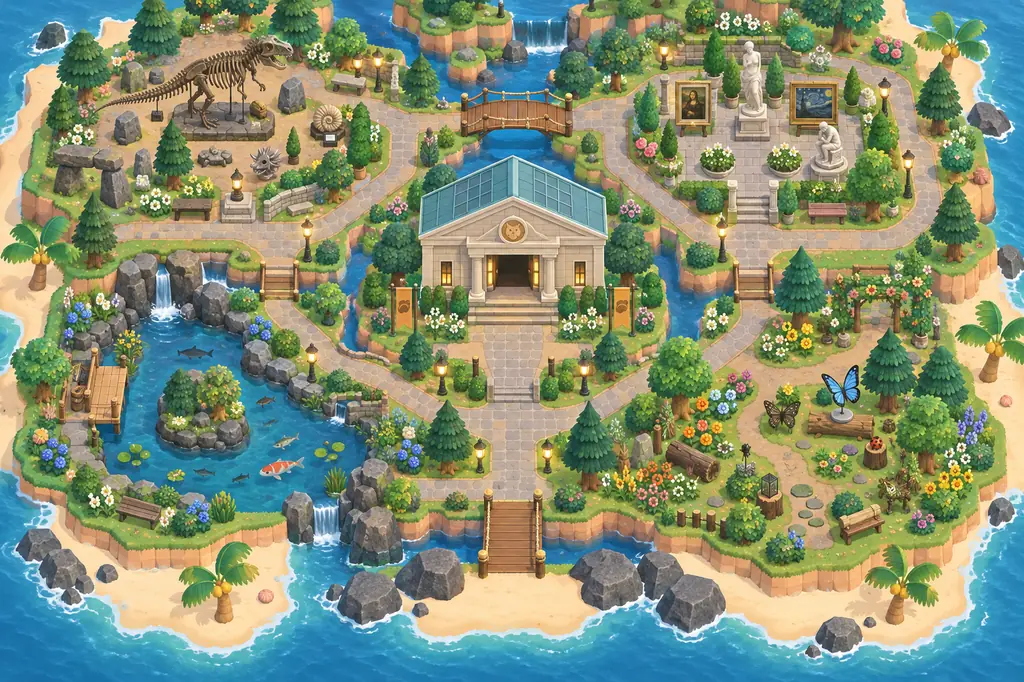
- Mark the door and the arrival view. Decide whether visitors see the museum immediately, approach it through a garden, or cross a bridge into a campus. Keep the first view simple enough to read.
- Draw one dependable walking loop. Connect the museum to your main town route before adding scenic detours. A loop prevents dead ends and makes fossils, shops, and daily tasks easier to reach.
- Assign four small exhibit zones. Use separate spaces for fossils, art, aquatic life, and bugs, or combine two zones when your map is small. Give every zone one clear focal object.
- Add a visitor service corner. A bench, donation-themed table, café, reading nook, or gift shop scene makes the outside feel intentional without blocking the museum entrance.
- Walk the build before detailing it. Check doors, bridges, beach exits, and cliff edges with a temporary path. Fix movement first, then add flowers, lighting, fencing, and small props.
Four ACNH Museum Layout Ideas to Test
These layouts solve different problems. Pick one as a starting structure, then borrow details from the others only after the main route works.
The central plaza museum
Place the museum at the end of a straight or gently curved plaza so it becomes a civic landmark near shops and Resident Services.
- Best for
- City, town, formal, and highly organized islands.
- Planner setup
- Reserve a broad arrival square, two side paths, and one short service loop before decorating the façade.
- Build note
- Keep the plaza open enough for seasonal changes. Benches, lamps, and two or three large props are usually stronger than a crowded display wall.
The nature museum campus
Nestle the building beside cliffs, waterfalls, ponds, and flower beds so the museum feels like a field-research center in the landscape.
- Best for
- Forest, cottagecore, natural, and no-terraforming themes.
- Planner setup
- Use a loop around the building and place one water or cliff feature on each side without closing the route.
- Build note
- Use trees as a frame, not a wall. Leave a clear line to the door and enough space to see the museum from the approach path.
The four-wing exhibit walk
Treat the museum as the center of four short branches: fossils, art, fish, and bugs. Each branch gets a different ground texture or planting rhythm.
- Best for
- Players who want several themed scenes without a giant flat plaza.
- Planner setup
- Place the museum on a crossroad and keep each branch short, with a turnaround or connection at the far end.
- Build note
- Repeat one material, such as stone or fencing, across all four wings so the district feels connected rather than like four unrelated yards.
The quiet coastal gallery
Build a smaller museum garden near the coast, using the shore, a pond, or a cliff view as the backdrop for art and fossil scenes.
- Best for
- Resort, coastal, minimalist, and scenic islands with a spare museum corner.
- Planner setup
- Protect the beach exit and pier route first, then use a shallow garden, terrace, or boardwalk to frame the building.
- Build note
- Do not sacrifice useful shoreline access for a photo angle. The gallery should still connect to the island's main loop.
Build the District in a Reliable Order
The easiest way to keep museum decorating manageable is to build from movement to mood. Place the building, test the route, and only then decide how detailed each outdoor zone should be. If the museum is already in a difficult location, you may not need to move it; a short path, a framed view, and two useful side scenes can still make it feel deliberate.
Use the table as a quick planning pass. It keeps the museum area connected to the rest of your island instead of turning it into a beautiful dead end.
| Area | What to check | What good progress looks like |
|---|---|---|
| Fixed features | Mark rivers, cliffs, beaches, pier, and nearby buildings before choosing the footprint. | The museum route respects the map instead of forcing awkward bridges or blocked exits. |
| Entrance | Look at the first screenful from the approach path and keep the door easy to find. | Visitors understand where to walk and the museum reads as the focal point. |
| Main loop | Connect the museum to shops, Resident Services, home areas, and the shore. | Daily errands stay short and the route has no frustrating dead ends. |
| Exhibit zones | Give fossils, art, fish, and bugs a distinct side scene or shared garden. | Each zone has a reason to exist without filling every tile. |
| Detail pass | Add fencing, lamps, flowers, signs, benches, and seasonal items last. | The campus feels finished while doors, bridges, and paths remain usable. |
ACNH Museum District Checklist
Use this order when you want a museum area that is attractive, easy to walk, and simple to revise later.
Before placing objects
- Mark the museum door and nearest approach path.
- Record fixed map features, nearby homes, shops, and beach exits.
- Choose a formal, natural, coastal, or compact direction.
- Sketch one safe version before moving buildings or cutting cliffs.
Build the route
- Connect the museum to one existing daily loop.
- Keep the entrance visible from the approach.
- Place bridges and inclines where they shorten errands.
- Walk the route before adding fences, flowers, or props.
Add exhibit scenes
- Reserve a fossil, art, aquatic, or bug area.
- Give each scene one focal object and one usable edge.
- Use repeated ground materials to connect the campus.
- Keep space for seasonal changes and future donations.
Final review
- Check museum doors, bridges, paths, and beach access.
- Remove objects that feel like dropped clutter.
- View the district from the arrival path and from the museum door.
- Save a planner reference before making the next major change.
Sources and Further Reading
This is a design guide based on the game's fixed map features and practical island-building patterns. These references provide game context while the layout decisions remain editorial recommendations.
- Nintendo: Explore Your Island - Official overview of island activities, residents, collecting, and decorating.
- ACNH map layouts guide - Use fixed features to choose a museum footprint that works with your map.
- ACNH island planner template - Save a route and zone plan before moving buildings or terraforming.
ACNH Museum Ideas FAQ
Where should I put the museum in ACNH?
Place it where the entrance can connect to an existing daily route and where you have enough room for at least one clear side scene. Near shops or Resident Services works for convenience; beside cliffs, water, or the coast works for a scenic campus.
How do I make an ACNH museum entrance?
Start with a readable approach path, then frame the door with a plaza, garden, lamps, statues, or a short bridge. Keep the first view open enough that visitors can immediately see where the entrance is.
What should I put around an ACNH museum?
Good choices include fossil displays, art easels, statues, flower beds, ponds, benches, lamps, a café corner, or a small gift-shop scene. Use a few purposeful objects instead of a random pile.
Can I build an ACNH museum district without terraforming?
Yes. Keep the existing cliffs and rivers, use paths and building placement to define the campus, and let flowers, fencing, trees, and furniture create the exhibit zones.
How many exhibit areas should a museum district have?
Two to four small areas are usually enough. A fossil garden and art courtyard can carry a compact map, while a larger campus can add aquatic and bug edges without making the route confusing.
How do I plan an ACNH museum layout before moving buildings?
Mark the museum, fixed features, approach path, main loop, and side zones in the planner first. Test a simple safe version, walk the route in-game, and only then add detailed scenery.
Should the museum be close to Resident Services?
It can be, especially if you want a civic town center, but it does not have to be. A farther museum works when the path is clear and the district has a reason to be visited, such as a nature trail or coastal gallery.
How do I keep a museum area from looking cluttered?
Use one focal object per scene, repeat a small set of materials, leave walking space around displays, and remove items that do not support the route or the museum story.
Plan the Museum District Before You Move Anything
Sketch the building, main loop, exhibit zones, and fixed features in the ACNH Island Planner, then build the safe version before adding detailed scenery.
Open the Free ACNH Island Planner