ACNH Island Tunes: 8 Original 16-Note Ideas and a Simple Setup Guide
A good ACNH island tune is short, recognizable, and matched to the mood of your island. This guide gives you eight original 16-slot patterns, explains how the island tune editor works, shows how to change the melody with Isabelle, and helps you avoid tunes that sound rushed or muddy in everyday play.
Quick Answer: What Makes an ACNH Island Tune Work?
The easiest ACNH island tunes to live with use one short musical idea, repeat it once, and leave at least one pause. The editor gives you 16 slots, but filling every slot with a different pitch usually makes the result feel busy. Start with four notes, listen to the rhythm, then repeat or slightly change the second half.
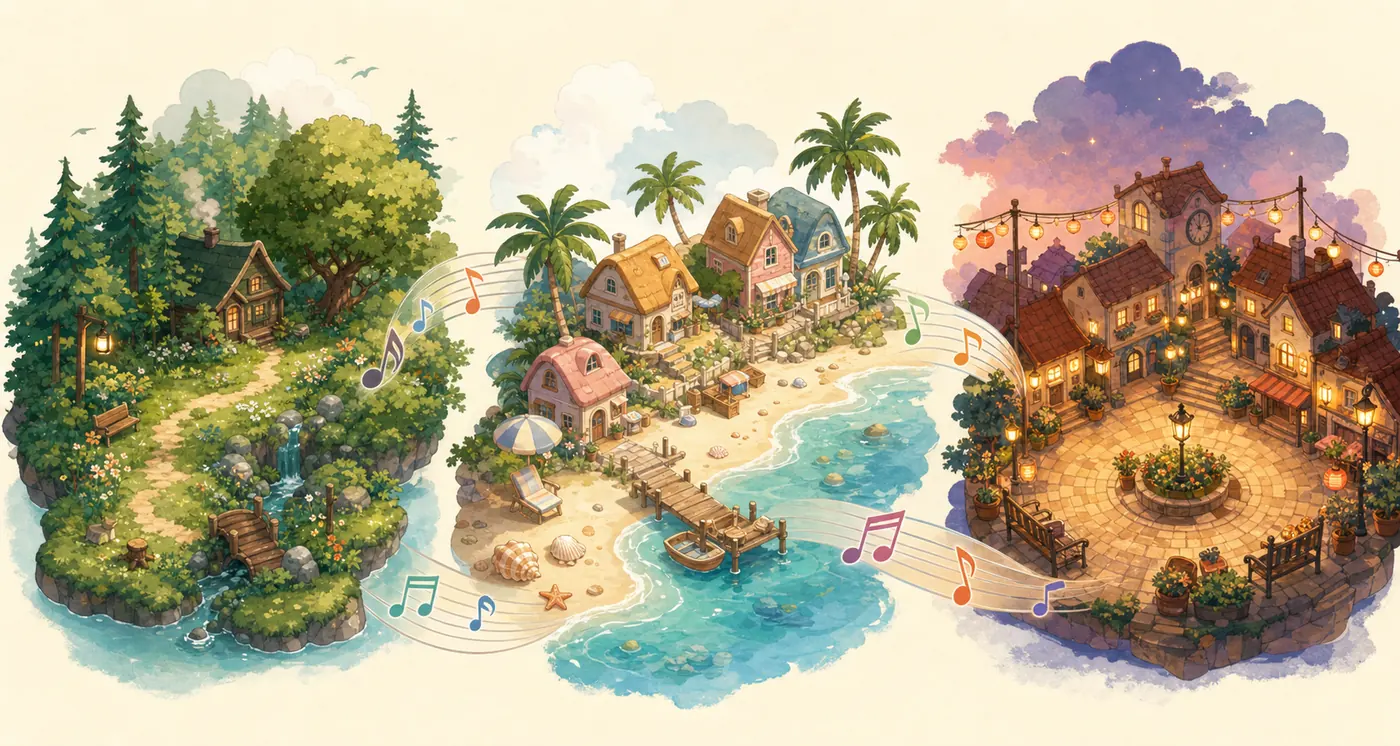
Choose the mood before the notes. A forest island usually suits a gentle rise and fall, a beach island works with bright repeated notes, and a city island can use a tighter rhythm with a stronger ending. Your tune plays in several everyday moments, so a simple melody often ages better than a complicated transcription.
- Use 4 to 6 different pitches instead of changing pitch in every slot.
- Repeat a four-note motif so the melody is easy to recognize.
- Place a rest near the middle or end to stop the tune feeling crowded.
- Test the tune in conversation, the hourly bell, and building entrances before keeping it.
How the 16-Note Island Tune Editor Works
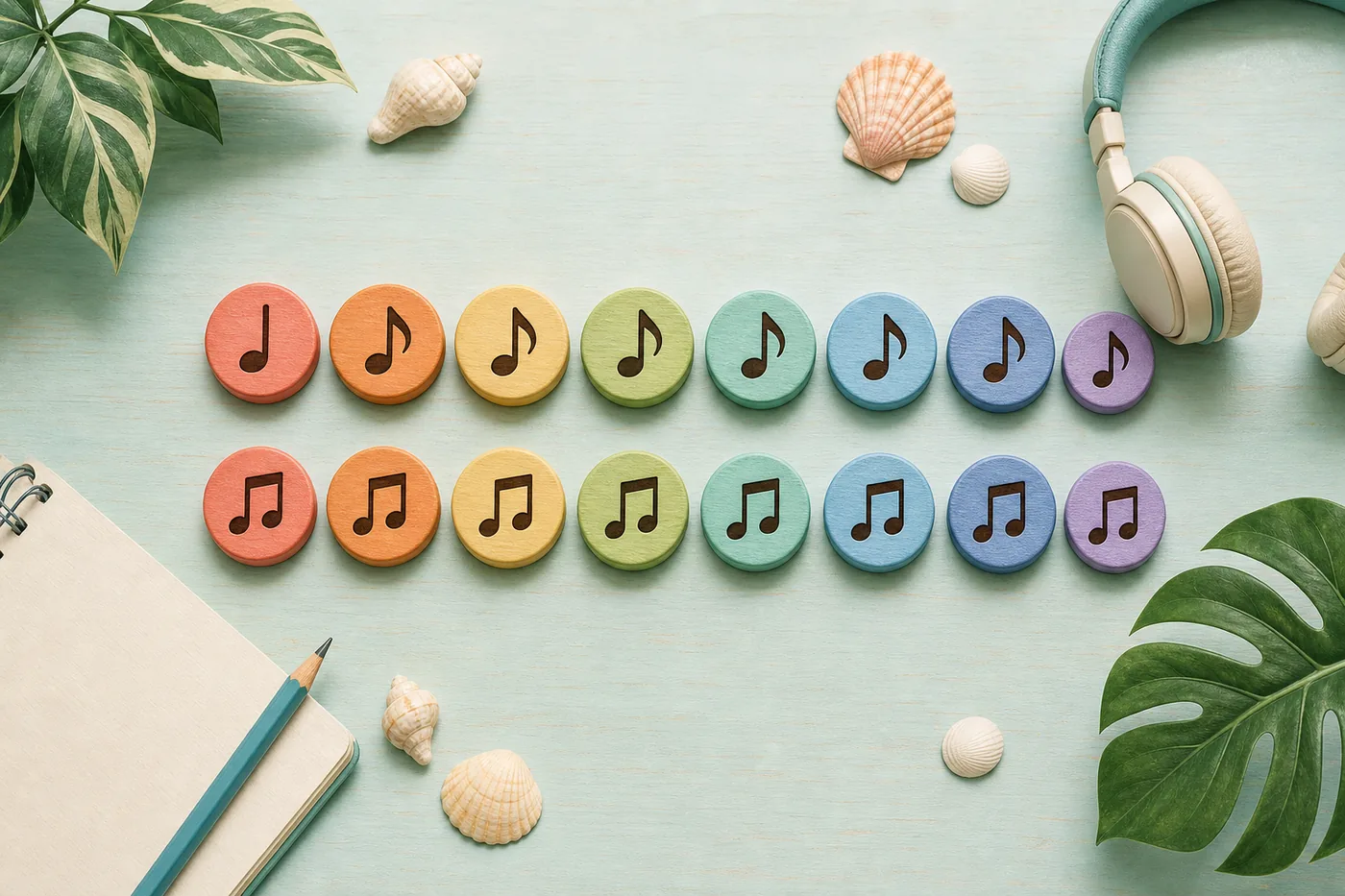
Animal Crossing: New Horizons stores the island melody as a sequence of 16 slots. Each slot can hold a pitch or a special timing symbol. Guides commonly describe the editor as fourteen pitches plus a rest and a hold option. You do not need music theory to use it: think of higher tiles as brighter, lower tiles as calmer, a rest as silence, and a hold as letting the previous sound continue.
The letter patterns below are planning shorthand rather than a claim that every colored tile has only one octave. Enter the notes by shape and relative height in the game editor, then listen and adjust. If a pattern feels too high, move the entire shape down while keeping the same spacing. That preserves the contour without rebuilding the melody.
Read left to right. The first eight slots introduce the idea; the second eight answer it with a small variation and a clear ending.
| Editor choice | What it does | When to use it |
|---|---|---|
| Higher pitch | Makes the tune feel brighter or more excited. | Beach, carnival, fairy, colorful, or playful islands. |
| Lower pitch | Makes the tune feel warmer, calmer, or more grounded. | Forest, rural, autumn, rustic, or historic islands. |
| Rest | Creates a silent slot and makes the rhythm easier to hear. | After a four-note phrase or before the final answer. |
| Hold | Extends the previous note instead of adding a new attack. | At the end of a phrase or on the melody's strongest note. |
| Repeated note | Builds a clear pulse without increasing complexity. | City, pop, market, festival, and energetic themes. |
8 Original ACNH Island Tune Ideas
These patterns are original, short, and designed for the 16-slot editor. Use them as starting points rather than fixed rules. A dash means a rest. If your preferred colored tile sits in a different octave, preserve the up-and-down shape and move the whole pattern together.
Gentle Forest Path
A soft arch that rises slowly and returns home without a sharp jump.
Best for: forestcore, cottage, mushroom, cedar, and natural islands.
Sunny Beach Greeting
Bright repeated notes make this feel friendly without becoming frantic.
Best for: tropical, resort, boardwalk, surf, and summer islands.
Cozy Rainy Morning
Small downward steps create a quiet tune that works well with muted scenery.
Best for: rainy towns, libraries, cafés, autumn lanes, and soft neutral themes.
Lantern Town Bell
A measured pulse and confident final note suit an orderly town center.
Best for: citycore, European streets, markets, stations, and formal plazas.
Fairy Garden Sparkle
Quick upward movement gives the tune a light magical character.
Best for: fairycore, glowing moss, star gardens, pastel, and dream islands.
Rustic Farm Welcome
A narrow pitch range keeps this tune relaxed and easy to hear repeatedly.
Best for: farms, orchards, rural villages, markets, and countryside builds.
Moonlit Museum Walk
Longer-feeling shapes and gentle drops create a thoughtful night-time mood.
Best for: museum districts, celestial islands, ruins, dark academia, and night tours.
Playful Market Day
Repeated tones and a small leap make this energetic but still readable.
Best for: festival plazas, food markets, kidcore, colorful shops, and busy visitor routes.
How to Change Your Island Tune in ACNH
Nintendo Support directs players to Resident Services and Isabelle for tune changes. The menu wording can vary slightly by language and version, but the workflow stays simple.
1. Visit the upgraded Resident Services building
The tune option is handled by Isabelle, so the starting tent must already have become the permanent Resident Services building.
2. Talk to Isabelle about island features
Choose the option about changing the island tune. If you do not see it, confirm that you are speaking to Isabelle rather than using the Nook Stop terminal.
3. Enter all 16 slots
Move each colored note tile to the pitch you want and use the special rest or hold symbols where the phrase needs space. Copy one row at a time to avoid shifting the second half by one slot.
4. Preview before confirming
Listen for rhythm first. If the tune feels crowded, remove one note rather than changing every pitch. Confirm only after the ending sounds intentional.
Nintendo's version 3.0.0 notes say Isabelle can now suggest several melodies when changing the island tune. Suggestions are useful for hearing the editor's range, but a custom pattern still gives your island a more distinctive identity.
Match the Tune to Your Island Theme
A tune does not need to imitate a famous song to feel memorable. It only needs to reinforce what visitors already see. If your ACNH island idea uses soft natural paths and dense planting, a gentle melody makes the whole arrival feel consistent. If the island is graphic and urban, repeated notes and a firmer ending can match the stronger visual rhythm.
Use the tune as the smallest part of a larger design system. Your entrance, flag, island name, path palette, lighting, and melody should point in the same direction. The island name ideas guide can help you check whether the name and tune communicate the same mood, while the layout ideas guide helps connect that mood to the map.
| Island theme | Tune shape | Avoid |
|---|---|---|
| Forest or cottage | Small steps, lower-middle notes, one calm pause. | Large repeated jumps that feel too energetic. |
| Beach or resort | Bright upward phrase, repeated notes, open ending. | A heavy low sequence with no rhythmic space. |
| City or market | Strong pulse, repeated pairs, clear final note. | A drifting melody with an unclear beat. |
| Fairy or celestial | Wider upward movement, light high notes, soft return. | Filling every slot with a different high note. |
| Autumn or rustic | Warm middle range, descending answer, steady pace. | Sharp jumps that fight the relaxed scenery. |
| Minimal or Japanese-inspired | Few pitches, deliberate rests, balanced repetition. | Overdecorating the melody with too many changes. |
Why Your Island Tune Sounds Wrong
Most problems come from rhythm and spacing, not from choosing the “wrong” pitch. Fix the structure before replacing the entire melody.
| Problem | Likely cause | Fast fix |
|---|---|---|
| The tune sounds rushed | All 16 slots attack a new note. | Replace one middle and one ending slot with a rest or hold. |
| The melody is hard to remember | There is no repeated motif. | Repeat the first four notes in slots 9–12, then change only the ending. |
| It sounds too childish or too serious | The pitch range conflicts with the island mood. | Move the whole contour higher for playful energy or lower for calm warmth. |
| The ending feels unfinished | The last note does not resolve the phrase. | Return to the opening note, then add a rest or hold. |
| A copied pattern sounds different | The octave, rest, or hold symbols were copied incorrectly. | Compare slot by slot and verify the two special symbols before changing pitches. |
| You get tired of hearing it | The pattern has too many jumps or no breathing room. | Simplify to four core notes and keep one clear pause. |
Gameplay References and Media Note
The instructions are checked against current official support and update notes. The two article images are original editorial illustrations because the official and community pages reviewed did not provide a clearly reusable set of tune screenshots for local publication.
- Nintendo Support: change island tune and flag - Official Resident Services and Isabelle workflow.
- Nintendo: Animal Crossing update notes - Official note about Isabelle suggesting melodies in version 3.0.0.
- NookNet Town Tune maker - Community tool for experimenting with note patterns; linked for utility, not presented as official.
- Nintendo Life island tune guide - Community reference for the 16-slot editor and note options.
ACNH Island Tune FAQ
How many notes are in an ACNH island tune?
The editor uses 16 slots. A slot can contain a pitch or a timing choice such as a rest or hold, so a strong tune does not need sixteen separate sounding notes.
Where do I change the island tune?
Go to the upgraded Resident Services building and speak with Isabelle. Choose the island-feature option for changing the tune, enter the pattern, preview it, and confirm.
Can I use a famous song as my island tune?
The editor can imitate short recognizable fragments, but this guide uses original patterns. Original motifs are easier to adapt to your theme and avoid relying on a transcription that may not fit the limited pitch and rhythm choices.
What is the best island tune for a cottagecore island?
Use a narrow range, small upward and downward steps, and at least one pause. The Gentle Forest Path or Rustic Farm Welcome patterns above are good starting points.
Why does my copied island tune sound different?
Check every slot for octave height and verify whether the source uses a rest or a hold. One shifted slot changes the rhythm of the entire second half.
Can visitors hear my island tune?
Yes. The tune appears in normal island moments, including interactions and island sound cues, which is why a short, comfortable pattern is usually better than a dense melody.
Should my island tune match my island name?
It does not have to, but matching them creates a stronger identity. A calm woodland name pairs naturally with a gentle descending tune, while a bright resort name suits a quicker upward motif.
Plan the Island Around the Mood
Once the tune feels right, sketch the entrance, main route, neighborhoods, and landmark zones so the map delivers the same first impression.
Open the ACNH Island Planner